
Renewable Energy: Expertise in Metal Fabrication for Energy Technology
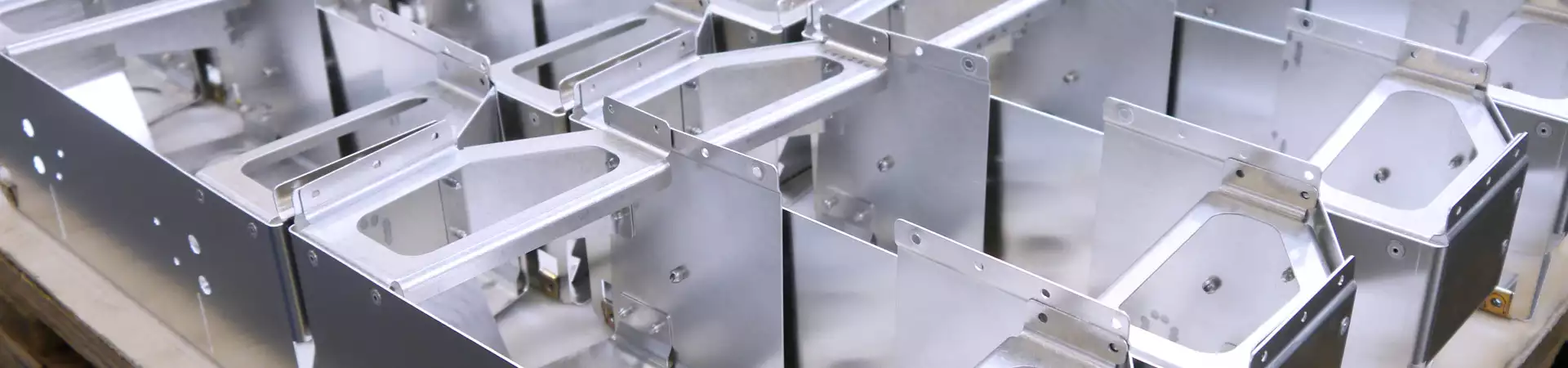
Metal enclosures and sheet metal components for renewable energy systems are constantly exposed to changing environmental and weather conditions. Fluctuating temperature cycles, UV radiation, condensation, and wind and snow loads require long-term mechanical durability and reliable corrosion protection. BVS Blechtechnik manufactures sheet metal components, enclosures and assemblies for manufacturers of photovoltaic systems, wind power systems, energy storage systems and hydrogen technology. We process stainless steel, aluminium and galvanised steel sheets in the thin-sheet range up to 3 mm in thickness.
The range extends from enclosures for sensitive power electronics to enclosures, sub-assemblies and switch cabinet systems for wind power, photovoltaic and energy storage systems.
We check your CAD data for tool access, bending radii and manufacturing efficiency to ensure a smooth start to your series production..
Areas of application in modern energy technology
The requirements for sheet metal components vary considerably depending on the subsystem and the location of the power plant:
- Photovoltaics & inverters: Enclosures for sensitive power electronics with integrated cooling fin and airflow management concepts in accordance with customer specifications. The enclosures must meet high protection ratings against dust and water jets when used outdoors.
- Battery storage & power electronics: Sub-assembly carriers, battery racks and module enclosures for stationary and industrial storage systems. The focus here is on high mechanical load-bearing capacity, shock and vibration resistance, and defined earthing points.
- Wind turbines: Baugruppen für die Turm- und Gondel-Elektronik sowie Steuerungsschränke. Durch die dauerhaften Schwingungen während des Betriebes sind eine hohe Dauerschwingfestigkeit der Schweißnähte und korrosionsbeständige Beschichtungen essenziell.
- Charging infrastructure & hydrogen technology: housing components for charging points, as well as components for electrolysers and fuel cell systems. In addition to protection against vandalism and the elements, precise fit for sealing and locking systems plays a key role here.
Quality requirements in energy technology
Components for photovoltaic, wind power and energy storage systems must function reliably over the long term under the stresses of weather, vibration and temperature. BVS takes manufacturing tolerances, weld design, corrosion protection and assembly requirements into account right from the work planning stage. Documented inspection steps accompany the entire manufacturing process, from prototype to series production.
Material selection and corrosion protection for outdoor applications
The service life of metal components in the energy sector depends on the interplay between the material, the joining technique and the surface treatment:
- Stainless steel: Used in environments with high atmospheric stress, high humidity or in coastal regions. After welding, heat-affected zones are removed by pickling or blasting to fully restore the passive layer and thus corrosion resistance.
- Aluminium: The preferred material for weight reduction in mast and roof installations. Aluminium provides a natural oxide layer, high thermal conductivity for heat dissipation designs and reduces the overall weight of the structure.
- Galvanised and powder-coated steel: A cost-effective solution for load-bearing systems and enclosures subject to high mechanical stress. Carefully selected coating systems involving zinc or powder application reliably protect the base material against moisture and mechanical abrasion.
Manufacturing processes for photovoltaics, wind power and energy storage technology
The processing of thin sheet metal with thicknesses of up to 3.0 mm requires a series of carefully coordinated production steps to ensure high fatigue strength and dimensional accuracy.
During the cutting stage, sheet metal blanks are separated using laser cutting, and cooling or ventilation structures are punched out. The targeted addition of beading stiffens flat sheet metal and prevents vibration-induced humming caused by air flows or the frequencies of power transformers. During the subsequent bending process, automatic angle measurement systems ensure the bending position remains consistent, even with varying material batches.
Joining is carried out using TIG, MIG/MAG or robot-assisted laser welding to produce low-distortion, leak-tight seams. Depending on customer requirements, enclosures can be designed to meet protection ratings such as IP54, IP65 or IP66. In addition, thermally non-critical joining methods such as press-fit fasteners, clinching or riveting are used where coatings or microstructures need to be protected. The process is completed by mechanical assembly, which involves fitting outdoor seals, cable entries and hinges.
Process reliability for outdoor applications and open-space installation
In the case of components for energy technology, dimensional deviations on site or in the field lead to costly delays. Quality assurance at BVS therefore focuses primarily on interface and tolerance checks:
Prior to production approval, the production planning department simulates the forming behaviour and checks bending radii and sealing edges in the CAD model. To prevent fatigue cracks under cyclic vibration loads, joints and weld seams are specifically designed to withstand dynamic stresses. During production, the use of material from a single batch and metrological initial sample inspections prevent dimensional deviations from occurring during bending. Each production run is monitored through documented inspection steps to ensure consistent dimensional accuracy from the prototype right through to mass production.
Please send us your drawings or specifications so that we can carry out a thorough initial technical assessment.
Frequently asked questions about metal fabrication in the renewable energy sector
Which surface treatment processes protect metal components in outdoor applications?
Depending on the base material, pickling and passivation (for stainless steel) or powder coating on zinc primers are used to achieve long-lasting corrosion protection in outdoor applications.
Welche Blechstärken verarbeitet BVS für Komponenten der Energietechnik?
Der Schwerpunkt liegt auf Feinblechen im Stärkenbereich bis ca. 3,0 mm. Verarbeitet werden Edelstahl, Aluminium, unlegierte sowie feuer- und elektrolytisch verzinkte Stahlbleche.
Can assemblies be supplied pre-assembled?
Yes, in addition to sheet metal working, BVS also carries out mechanical and electrical assembly of sub-assemblies, including ESD-compliant assembly. This includes pressing in connectors, fitting seals and cable glands, and attaching locking and hinge systems. Electronic components such as power supplies, fans, switches and printed circuit boards are also assembled into fully functional sub-assemblies.
About us
RECHTLICHES
In der Nähe
News
 Investing in process reliability: BVS Blechtechnik optimises filter cleaning with state-of-the-art high-pressure technology23. October 2026 - 16:45
- Metal Bending: Processes, Materials, and What Really Matters in Practice31. July 2026 - 15:47
- BVS Summer BBQ in Böblingen: Team Spirit, Networking, and Cohesion as Keys to Success21. July 2026 - 11:45


Contact