Mechanical engineering Sheet metal processing: Durable components for continuous use
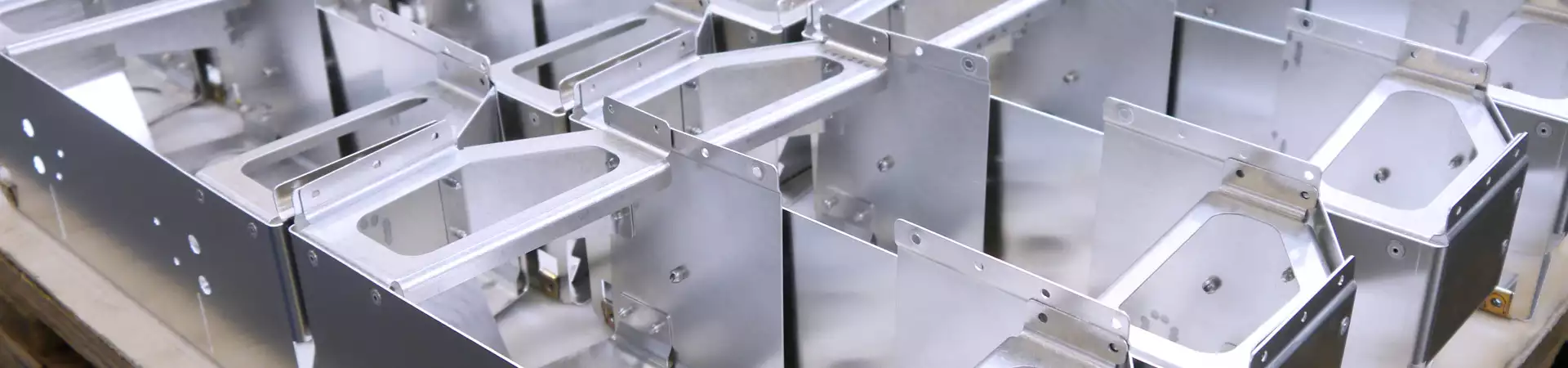
Machine components are under constant load: vibrations, dynamic forces and harsh environments. This is precisely why BVS develops and manufactures resilient sheet metal components at its Schwerin site – precise, low-distortion and assembled ready for use. Cladding, supporting structures and functional parts made of sheet metal are exposed to permanent vibrations, dynamic loads and harsh environmental conditions. Components must therefore not only be dimensionally accurate, but also designed to withstand these loads. The BVS team solves precisely these manufacturing challenges. We support you from load-compliant design to precise CNC production, certified welding processes and delivery of the ready-to-install assembly.
Check design for manufacturability
Clarify potential savings on the CAD model and discuss specific load cases at eye level with our production experts.
Fuse depending on load case and vibration level
We reliably secure screw connections that cannot be welded due to their design against self-loosening. Depending on the load case and vibration level, we apply:
- Material-locking locking devices such as anaerobic threadlockers to DIN 267
- Positive locking devices such as spring washers, ribbed washers or wedge lock washers
- Force-locking safety devices, e.g. defined preload forces according to VDI 2230
This ensures that your connections remain permanently stable even under prolonged vibrations or changing loads
Material dimensioning: reducing costs through load-appropriate sheet thicknesses
Higher sheet thicknesses do not automatically mean greater stability, but often only drive up material costs and the overall weight. In the design of machine components, unnecessary masses lead to higher moments of inertia, which in turn requires more powerful and more expensive drives. We therefore analyze the actual load cases before the start of production.
The required rigidity can often be achieved through targeted bends or beading instead of relying on thicker material. This reduces the amount of material used while maintaining the same mechanical load-bearing capacity.
- Cutting to size up to 6 mm: We process steel, stainless steel and aluminum up to 6 mm material thickness in our own factory – ideal for machine cladding and functional parts.
- Advanced processes: If components require greater material thicknesses or thermally sensitive materials, we integrate water jet or plasma cutting into the process via our partner network.
This differentiated choice of materials ensures that your enclosures and components are designed precisely for the required static and dynamic loads.
Machine enclosures: Occupational safety and noise protection as a design goal
A machine enclosure serves as a primary barrier for accident protection and as an insulating element to comply with noise protection limits.
To eliminate the risk of injury to operating personnel, we implement defined mechanical standards in production:
- Safety edges: Every component is deburred by machine. In gripping and maintenance areas, we also round edges ergonomically to prevent cuts during manual intervention.
- Ground joints: We grind weld seams in the direct contact area flat. This ensures an injury-free feel and makes it easier to clean the machine surfaces.
These design details ensure that your cladding meets the legal requirements for occupational safety and at the same time reflects the ergonomic requirements of your end customers.
Component assembly in Schwerin: Relieving the strain on in-house production lines
Assembly space is often in short supply in mechanical engineering and highly paid technicians should not spend time searching for screws. If required, BVS can take care of the complete pre-assembly – from the mechanical sub-assembly to the solid console, including the electrical components. This service takes the pressure off your production lines and offers tangible logistical benefits:
- Pre-assembled assembly kits: Components are assembled in the exact order in which they are required on the assembly line.
- Clear part identification: Each assembly and each individual part is clearly marked (e.g. by laser marking or label). This completely eliminates search times and mistakes at the assembly station.
- Mechanics and electrics from a single source: in addition to the sheet metal itself, BVS also installs switches, displays and cable harnesses so that a fully functional system component is delivered directly to the assembly line.
Pragmatic solutions for scalable mechanical engineering
Sheet metal processing for mechanical engineering requires a deep technical understanding of where the machine will actually be used. The replacement of expensive milled parts, the load-appropriate dimensioning of welded assemblies and the logistically sophisticated final assembly directly in Schwerin create real competitive advantages. BVS provides exactly the mechanical basis and process reliability that machine manufacturers need for their series production – this reduces internal capacity bottlenecks, minimizes handling costs and stabilizes your supply chain during series start-ups.
Discuss production capacities and assembly
Evaluate unused potential for component assembly and discuss your upcoming mechanical engineering projects with us.
FAQ: Sheet metal processing for mechanical engineering
Up to what sheet thicknesses does BVS Maschinenbau manufacture components in-house?
The Schwerin site processes regular sheet thicknesses of up to 6 mm in-house using highly efficient laser cutting and punching systems. For thicker materials or other cutting processes (such as plasma and water jet cutting), BVS works with an established network of partners and supplies you with the finished component from a single source.
How does BVS verify the load-bearing capacity of welded assemblies?
The basis is formed by trained specialist personnel and compliance with current welding certifications. BVS also carries out practical endurance tests such as pressure tests, crash simulations and destructive tests on critical components during the prototype phase in order to ensure that the design can withstand high dynamic loads.
When is it worth switching from manual welding to robotic welding?
Robot welding shows its economic strengths in medium to large batch sizes. It guarantees shorter cycle times and absolute repeat accuracy of the weld seams in series production. However, manual welding by skilled workers remains indispensable if the component geometry is very complex or accessibility for the robot arm is restricted.
How can expensive milled parts be replaced by sheet metal constructions?
Through production-oriented co-engineering. Mechanical functions are rethought: instead of milling from the solid, designers insert stiffening beads into thinner sheets. Complex threads are replaced by CNC-controlled pressed-in bushes and complex welded constructions are replaced by precise bends.
What specific added value does component assembly by BVS offer?
You take the strain off your own production and significantly reduce your stock levels. Instead of coordinating countless individual parts from different suppliers and assembling them yourself, BVS provides you with a finished, tested subassembly or a precisely sorted assembly kit directly for your production line. This drastically reduces set-up times, search time and internal handling costs.
About us
RECHTLICHES
In der Nähe
News


Contact